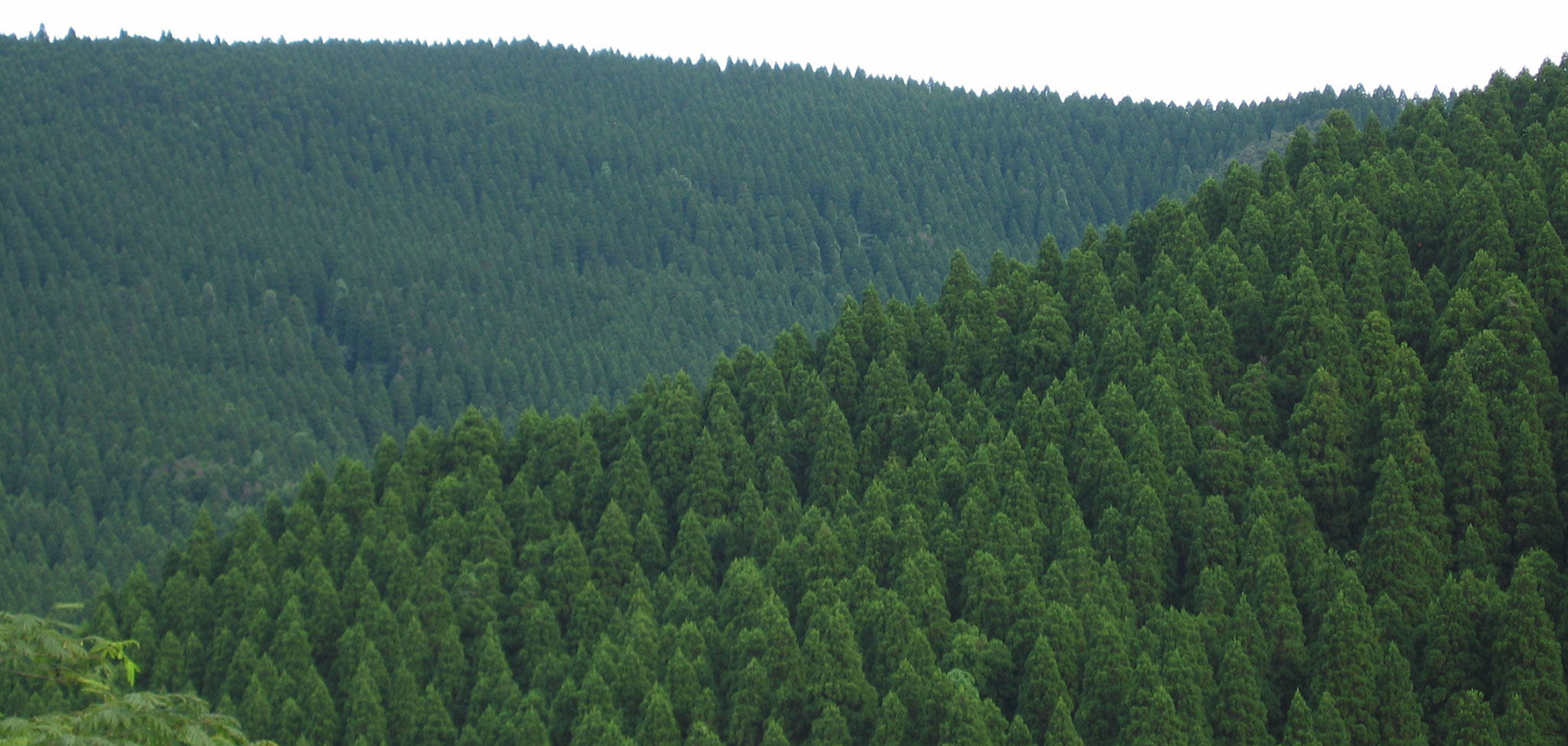




100% Utilization of Wood Resources
Zero Waste & Circular Use of Wood
Wood is more than just “products.”
At Takamine Wood, our focus is not only on finished products such as flooring
and wall paneling cut from the logs,
but also on making full use of what is generated along the way—
bark, offcuts, and sawdust, as much as possible.
By reusing these as fuel for drying boilers, paper-making chips, and resources that support
pig farming and organic cultivation,
we help build a system in which resources circulate “from the mountains to the towns.”
This approach also reflects the needs of our time, as carbon neutrality and sustainability
become increasingly important.
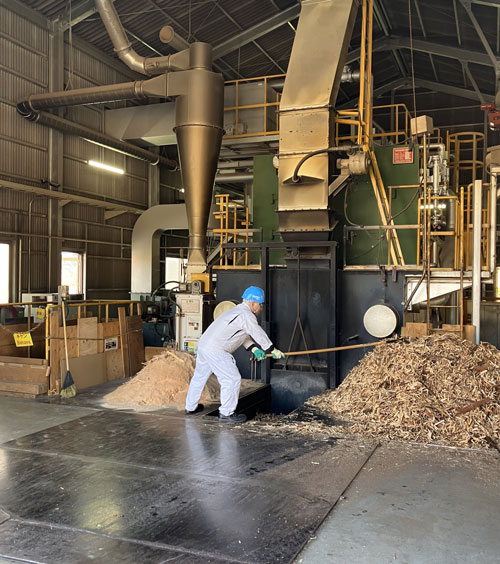
Bark and offcuts become fuel for the drying boiler.
The “bark” of logs and the “offcuts” produced during sawing are parts
that were once often discarded.
At Takamine Wood, these materials are crushed and reused as fuel for our drying boiler.
By sourcing as much of the heat energy used in our own mill as possible from the wood itself,
we reduce dependence on fossil fuels and help lower CO2 emissions.
In this way, the sawing and drying processes are connected through a small energy cycle.
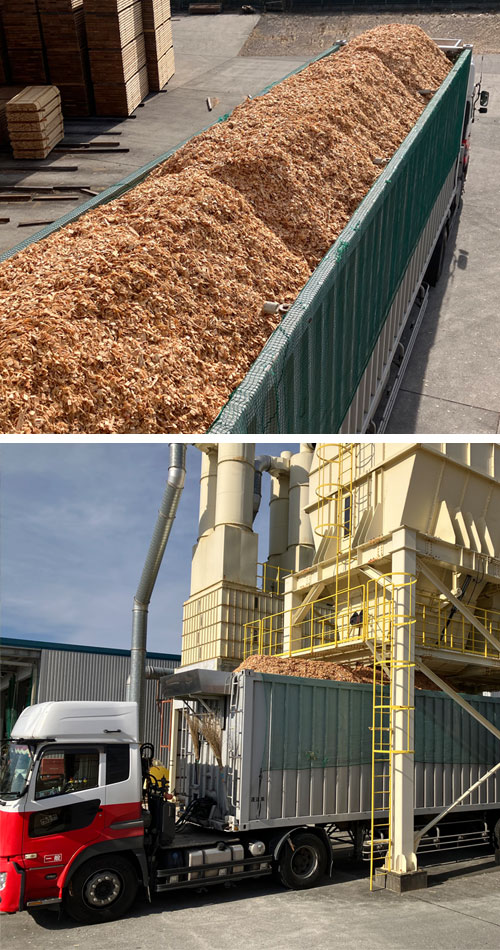
Offcuts become chips.
Sawdust supports “soil building.”
Offcuts such as backs are processed into chips and supplied to paper manufacturers.
In this way, the wood takes on a new form and returns to everyday life as paper products.
Sawdust produced during sawing is used by nearby pig farmers as bedding in pig houses.
After use, the mixture of bedding and manure returns to the fields as compost,
supporting organic cultivation.
Timber brought down from the mountains becomes building material, then fuel,
then paper, and even fertilizer.
By using the value derived from a single tree all the way to the end,
we create many “small cycles” that also support local agriculture and everyday living.
Making circular production the norm.
As terms like sustainability and ethical consumption become more familiar,
it is no longer enough simply to “choose eco-friendly materials.”
Increasingly, we are also asked to consider
how materials are used and where they eventually return to.
Our approach to using wood at Takamine Wood is not flashy or spectacular.
Even so, our efforts to circulate bark, offcuts, and sawdust within the region
are something we hope will quietly and steadily become part of “normal”
manufacturing practice in the years ahead.