



1. High durability and decay resistance
Obi cedar is rich in resin, making it resistant to decay and highly water-resistant.
Its heartwood (the reddish core) is also known for termite resistance, making it suitable for long-lasting homes.
Comparative tests against termites
Obi cedar has long been considered termite-resistant
Obi cedar (Obisugi) has historically been known as a wood that termites are less likely to attack. Certain components contained in the wood are considered to have properties that deter termites.
Heartwood contains termite-killing active components
In experiments conducted by Miyazaki University and the Toyo Termite Research Institute, tests using heartwood wood flour of Obi cedar reported that 30 Formosan subterranean termites were all dead by day 11. These results indicate that Obi cedar heartwood contains components with termiticidal activity.
High durability confirmed in comparisons with other wood
In a soil burial test conducted by Miyazaki Prefecture’s wood-related association,
Obi cedar boxed-heart posts (12 cm square) were compared with whitewood laminated posts (12 cm square)
after being buried for about 10 months.
Obi cedar—both green and dried—showed only minor damage, while the whitewood suffered termite damage
severe enough to crumble at the surface.
-
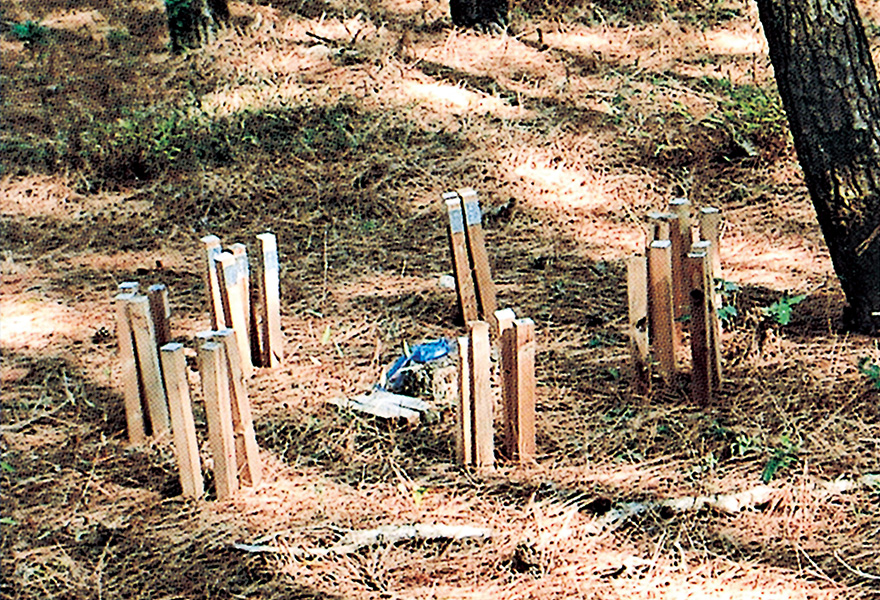
Field exposure test in a pine forest (Field Exposure Test)
-
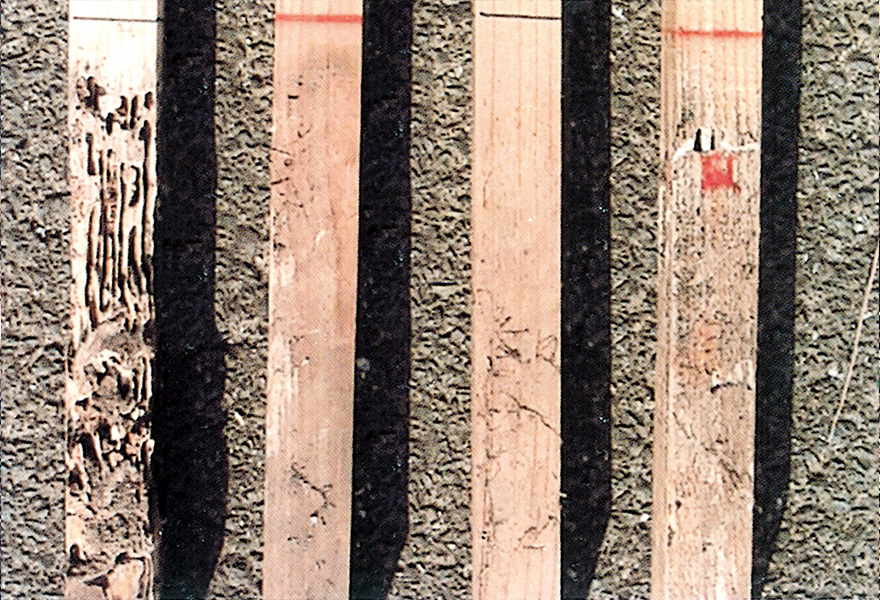
After 3 months: Field exposure test (Field Exposure Test)
-
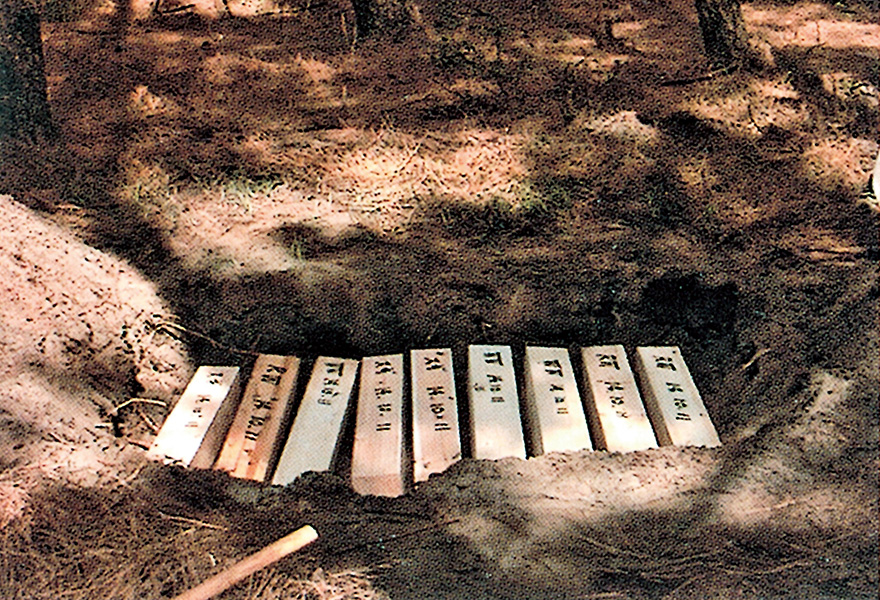
Soil burial test in a pine forest (Soil Burial Test / Ground Burial Test)
-
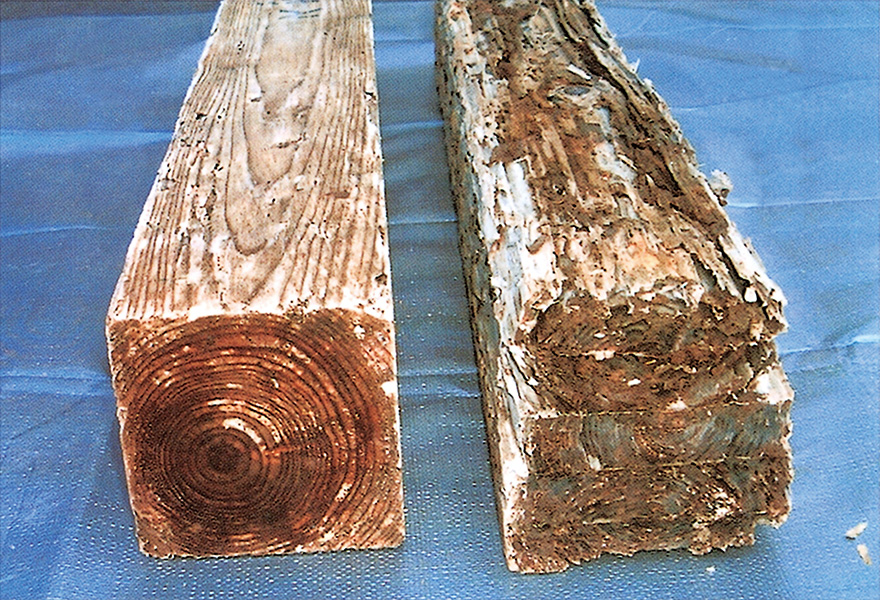
After 2 years: Soil burial test (Soil Burial Test / Ground Burial Test)
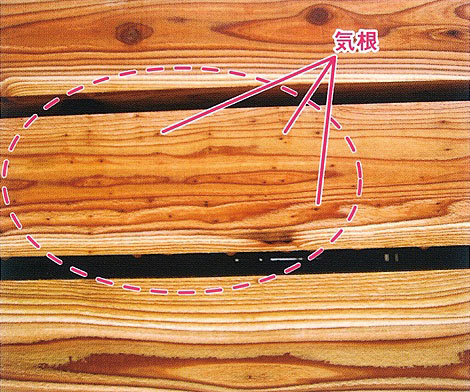
About “aerial roots” often seen in Obi cedar
On the surface of cedar trunks, you may sometimes see small whisker-like protrusions or tiny wart-like bumps.
These are called “aerial roots.”
When sawn, they can appear as small dark dots on the surface of the lumber. Unlike ordinary branches,
they do not extend deeply into the trunk and are typically enveloped into the trunk over several years.
Therefore, they have little to no impact on strength performance, and the wood can be used with confidence as structural material.
Aerial roots tend to appear around 1 meter above the ground and are especially common in Obi cedar.
Conversely, if aerial roots are visible on the surface of a product, it is sometimes said that the species is likely to be Obi cedar.