




Processing for Products such as Paneling & Flooring
Processing for Paneling & Flooring
From Lumber to Finished Products
At Takamine Wood, domestic Japanese cedar—including Obi cedar (Obisugi)—is processed through a combination of air drying and kiln drying,
then finished as secondary processed products such as paneling and flooring.
By managing moisture content and performing machining, repair, and sorting in-house, we are committed to producing stable, reliable quality.
- 1. Air drying
- 2. Kiln drying (steam-based medium-temperature kiln)
- 3. Processing into products such as paneling & flooring
- 4. Repair
- 5. Product distribution
-
STEP 1
Air Drying
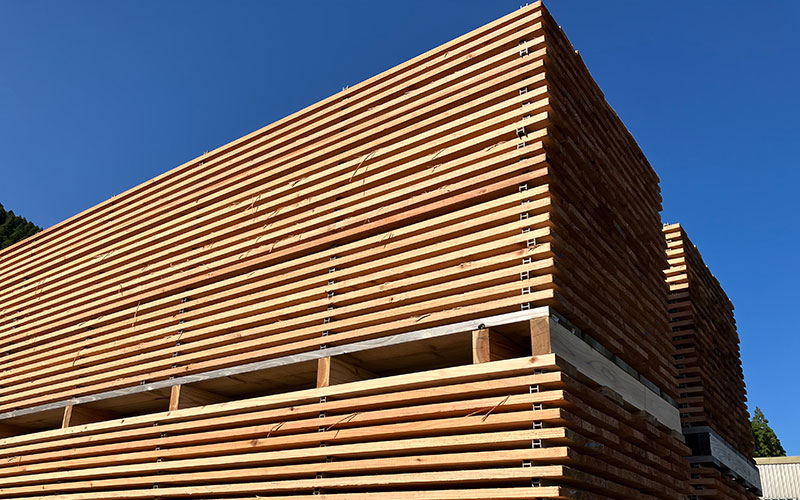
Sawn lumber is first air-dried thoroughly under the sun.
By drying slowly over time in a well-ventilated area, moisture is removed in a natural way without putting excessive stress on the wood. -
STEP 2
Kiln Drying (Steam-Based Medium-Temperature Kiln)
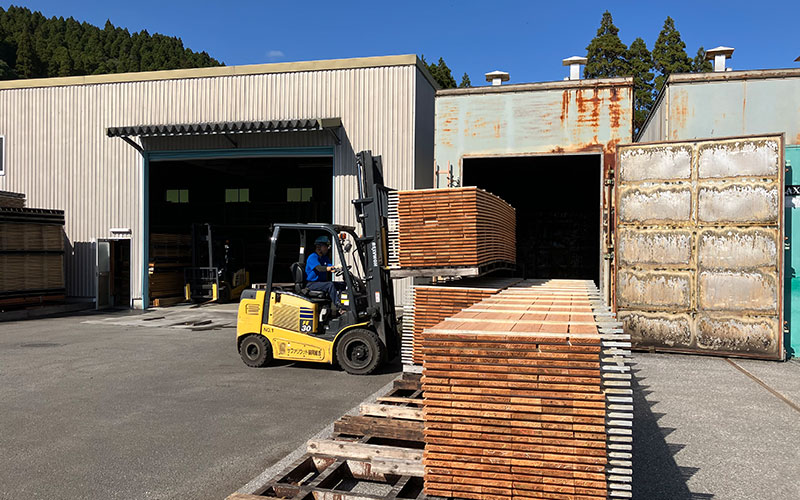
After air drying, lumber undergoes programmed drying in a steam-based medium-temperature kiln.
To make moisture content as uniform as possible, we use an automatic stickering/unstickering system equipped with a microwave moisture meter.
Any lumber that remains at 15% moisture content or higher after drying is re-dried to achieve stable, low-variation results. -
STEP 3
Machining into Products such as Paneling & Flooring
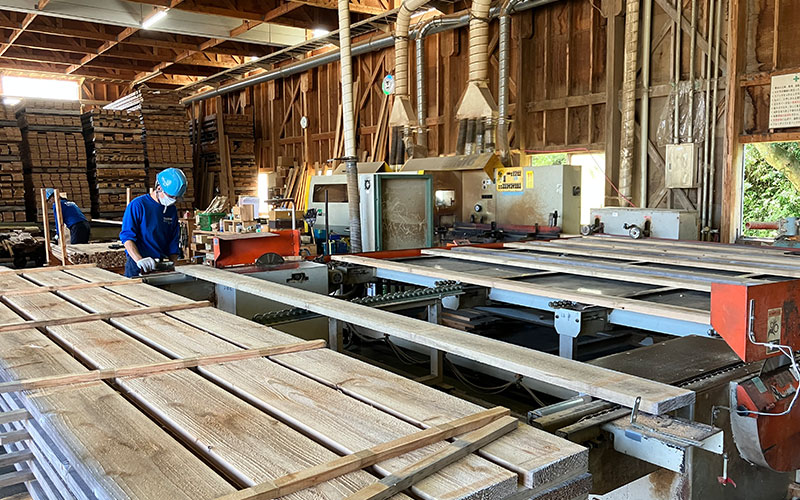
Dried lumber is machined into product sizes for paneling, flooring, and more.
After shaping profiles and finishes according to the intended application, coatings are applied to refine the appearance and color tone. -
STEP 4
Repair
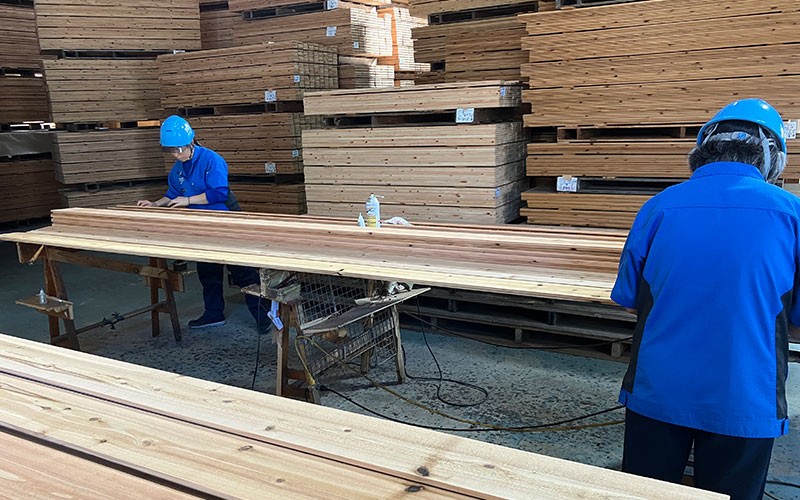
Areas with knot splits or loose knots are repaired using putty filling.
After repair, surfaces are sanded to improve touch and appearance, enhancing product quality for long-term use in interior and exterior applications. -
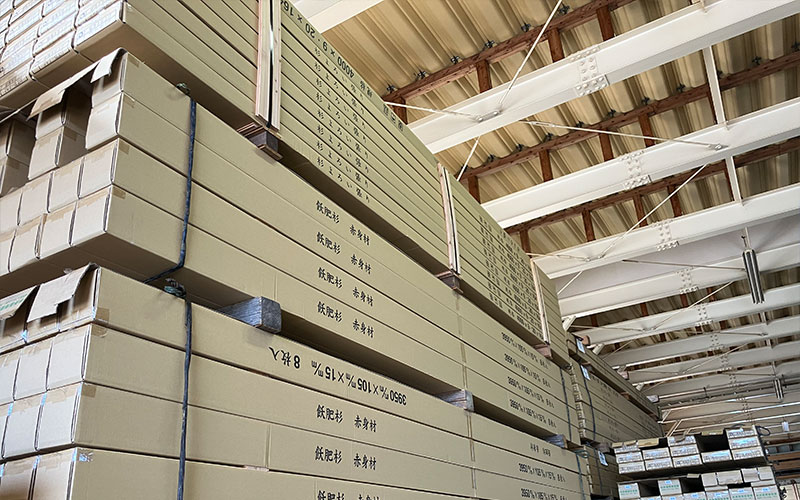
STEP 5
Product Distribution
After processing, repair, and sorting, products are organized and stored by application and specification, then shipped to builders and distributors nationwide.
By combining air drying with kiln drying, we deliver products that balance the natural character of solid wood with the stability and workability required on construction sites.