




Sawmilling Process
Sawmilling Process
From Logs to Lumber
At Takamine Wood, we manage the entire workflow—from log procurement to sawing, drying, and shipping— to produce consistent, high-quality lumber.
- 1. Log procurement
- 2. Debarking & primary processing
- 3. Cutting to size
- 4. Sawing
- 5. Edge trimming
- 6. Drying
- 7. Bundling & shipping
-
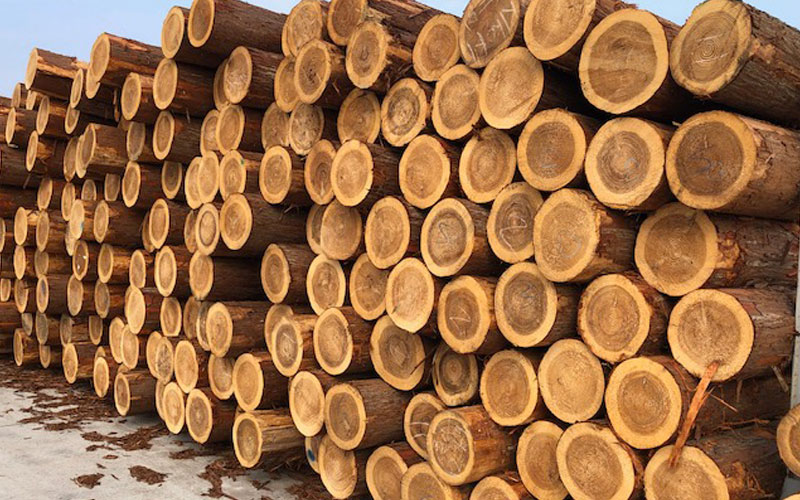
STEP 1
Log Procurement
Our experienced buyers carefully select and procure only high-quality logs—such as Obi cedar (Obisugi)— from legally verified timber sources at wood markets.
-
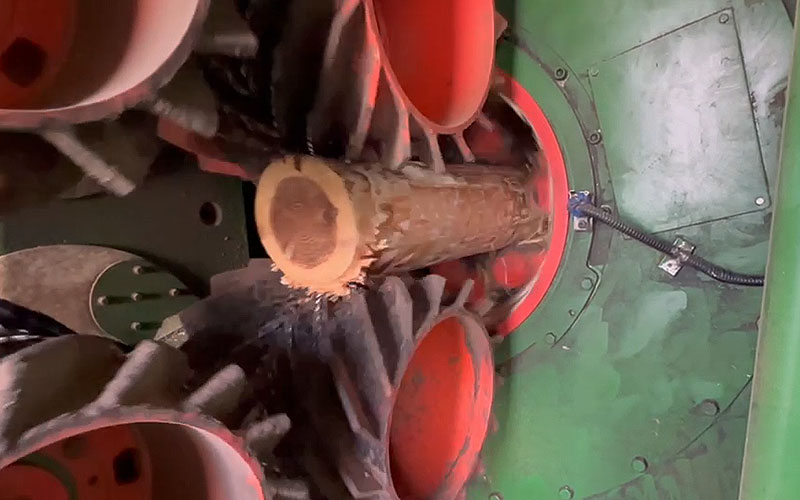
STEP 2
Debarking (Ring Debarker)
The bark is removed using a ring debarker, and the logs are sent onward on a carriage to the next process.
-
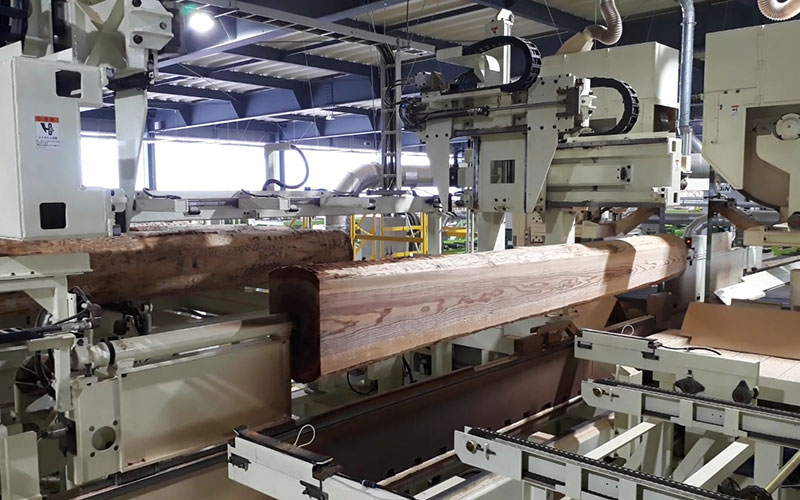
STEP 3
Primary Breakdown (Carriage)
This is the first step in turning a log into a product. The log is faced (flattened) and broken down from a round shape into squared cants, then moved to the next process.
-
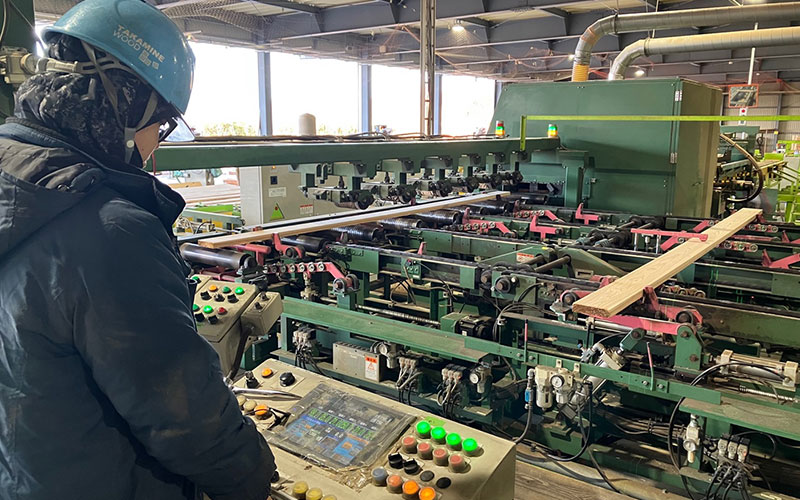
STEP 4
Sawing (Boards & Timbers / Planer & Gang Saw)
Cants and logs are sawn into boards and timbers. We then use equipment such as planers and gang saws to improve dimensional accuracy and surface finish.
-
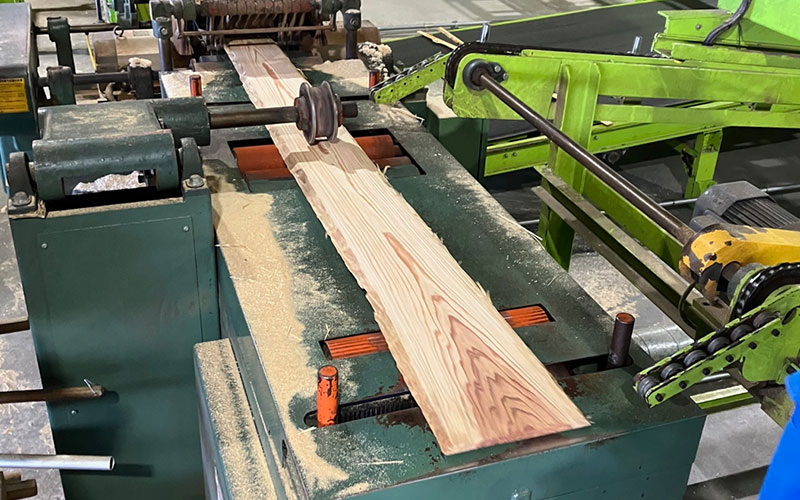
STEP 5
Edge Trimming
Any remaining rounded edges (wane) are removed by machine, squaring the material so it can be used as dimensional lumber.
-
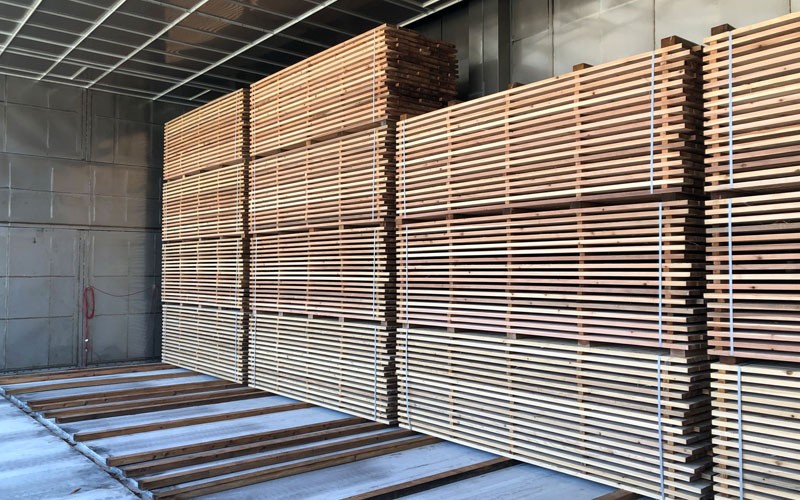
STEP 6
Air Drying & Kiln Drying
We begin with natural air drying under the sun. Some products, such as scaffold boards, may be shipped at this stage. For other products, kiln drying is used to adjust moisture content and produce stable lumber.
-
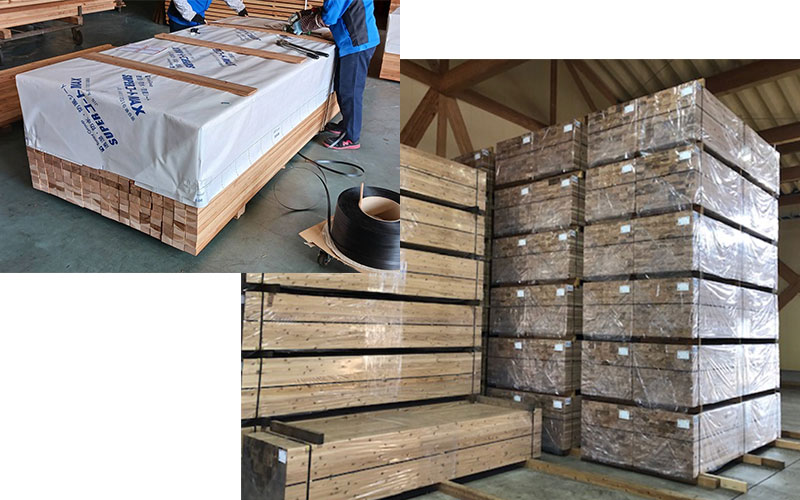
STEP 7
Packaging
After sorting by application and bundling, products are shipped nationwide to wood markets and wholesalers, as well as overseas.